

+86-13145827500 Charlie@elskyipc.com

Views: 0 Author: Site Editor Publish Time: 2026-03-24 Origin: Site
The healthcare sector is undergoing a rapid transformation, driven by the integration of cutting-edge technology into everyday medical practices. One of the most significant drivers of this revolution is the adoption of Mini PCs—compact yet powerful computing systems that enable smarter, more efficient healthcare solutions. As medical devices become more connected and data-driven, the need for high-performance, space-saving, and energy-efficient computing solutions is greater than ever.
At ELSKY, we understand the importance of technological advancements in the healthcare industry, and our Mini PCs are designed to meet the growing demands of smart healthcare. These devices are not only revolutionizing the way medical professionals operate but also significantly improving patient outcomes. In this article, we will explore how Mini PCs are being used in various healthcare applications, including telemedicine, patient monitoring, and medical imaging, showcasing the game-changing role they play in modern healthcare settings.
Mini PCs are designed to offer a robust computing experience in a compact form factor. This makes them ideal for medical environments where space is often limited but powerful computing is still required. Whether it's in a patient room, an operating theater, or a mobile medical unit, Mini PCs provide the processing power necessary for handling sophisticated healthcare applications without occupying much space.
In many hospitals and clinics, large and cumbersome desktop computers are being replaced with sleek, space-saving Mini PCs that provide similar processing capabilities in a much smaller footprint. These devices are equipped with powerful processors and memory configurations that allow them to handle complex medical applications such as real-time patient monitoring, medical imaging software, and data-intensive diagnostic tools. Their compact size does not come at the cost of performance, as Mini PCs can run high-end applications for real-time patient monitoring, imaging analysis, and other critical tasks.
The space-saving feature is particularly important in environments such as operating rooms where clutter can reduce the efficiency of medical procedures. The smaller footprint of Mini PCs ensures that healthcare professionals can maintain a clean and organized workspace, without sacrificing computing power. Whether it's running patient management systems, storing and processing data, or operating medical devices like infusion pumps or diagnostic imaging systems, Mini PCs ensure that technology is readily available, without taking up unnecessary space.
Moreover, in mobile medical units or ambulances, where compactness is essential due to the limited space, Mini PCs offer an excellent solution for handling critical healthcare data and ensuring smooth medical operations. Their portability, combined with sufficient computational power, ensures that healthcare professionals can carry out diagnostics, store patient data, and communicate effectively, no matter where they are.
Application | Mini PC Benefit |
Real-Time Patient Monitoring | Handles large volumes of patient data, ensuring timely intervention. |
Medical Imaging Software | Supports image processing and diagnostic tools without taking up much space. |
Data Processing in Operating Rooms | Saves space while ensuring critical information is accessible in surgical environments. |
Telemedicine has emerged as one of the most significant advancements in healthcare technology in recent years, allowing patients to receive care from remote locations. The rise of telehealth platforms and virtual consultations has fundamentally transformed how healthcare is delivered, especially in underserved areas or during public health crises like the COVID-19 pandemic. However, none of these advancements would be possible without the support of powerful computing systems such as Mini PCs.
The ability to conduct remote consultations, monitor patients' health data, and analyze vital statistics has become a crucial part of modern healthcare. With Mini PCs, healthcare providers can integrate powerful processing capabilities into telemedicine systems, making it easier for doctors to connect with patients in real time. These compact devices are equipped with high-speed connectivity and the latest processors, allowing for seamless video conferencing, secure data transfer, and smooth virtual consultation experiences.
Mini PCs are not only efficient in managing video calls but also capable of processing and transmitting medical data quickly. Healthcare professionals can use them to send and receive patient records, medical reports, test results, and diagnostic images in real time. This is especially critical in cases where speed of diagnosis is crucial, such as in emergency healthcare scenarios.
Furthermore, Mini PCs can support collaborative care between multiple healthcare specialists who are located in different regions. Doctors can easily access a shared platform, discuss patient cases, and make joint decisions on treatment plans without the need to be physically present in the same room. The low energy consumption of Mini PCs ensures that these devices can be used in mobile telemedicine setups such as remote health clinics or disaster zones, making them a perfect fit for on-the-go healthcare delivery.
Real-time patient monitoring systems are critical in ensuring that healthcare providers can detect and respond to medical issues in real time. Mini PCs are playing a central role in the development of these systems, which gather data from a wide range of medical devices, including heart rate monitors, blood pressure cuffs, glucose meters, and ECG machines. The ability to monitor patient vitals continuously is essential for detecting early signs of complications and ensuring that timely interventions can be made.
In the case of patients who are undergoing critical treatments or in intensive care units, it is vital to have a system in place that monitors a variety of physiological metrics simultaneously. Mini PCs are equipped with the necessary processing power to handle the influx of data from multiple devices, ensuring that healthcare professionals have access to real-time updates on a patient’s status.
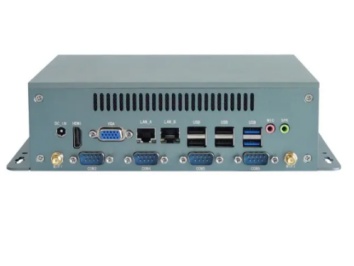
Medical imaging is another area where Mini PCs are making a significant impact. Whether it's CT scans, MRIs, or X-rays, medical imaging devices produce massive amounts of data that need to be processed and analyzed in real time. Traditionally, these systems required large and expensive workstations, but now, Mini PCs are capable of handling medical imaging data without sacrificing performance.
By leveraging powerful Mini PCs, healthcare providers can perform faster image processing and analysis, resulting in quicker diagnosis and more efficient workflows. For example, Mini PCs can be connected to imaging equipment to run advanced algorithms that automatically detect anomalies, such as tumors or fractures, allowing radiologists to focus on complex cases that require expert attention.
In medical laboratories, accurate and fast data processing is critical. Whether it's for blood tests, genetic screenings, or other diagnostic procedures, the need for efficient, reliable computing is essential. Mini PCs are increasingly used in diagnostic systems to ensure that lab results are processed quickly and accurately. Their compact design allows them to be integrated into laboratory environments without taking up valuable space, while their processing power enables them to handle complex data sets and run diagnostic software effectively.
Additionally, Mini PCs can support advanced technologies like artificial intelligence (AI) and machine learning, which are becoming essential in modern diagnostics. These technologies allow for the automation of routine diagnostic tasks, faster results, and more accurate predictions, further enhancing the capabilities of healthcare providers.
The Internet of Things (IoT) is transforming the way healthcare devices interact and share data. Mini PCs are playing a key role in this revolution by serving as powerful, yet compact, hubs for IoT-connected medical devices. They enable the seamless exchange of data between various devices, such as wearable health monitors, infusion pumps, and temperature sensors.
By connecting these devices to a centralized Mini PC, healthcare providers can access real-time data, receive alerts, and make data-driven decisions about patient care. This integration of Mini PCs with IoT devices is particularly beneficial in intensive care units (ICUs) and emergency rooms, where every second counts.
The impact of Mini PCs on healthcare technology is undeniable. From improving the efficiency of telemedicine to enhancing patient monitoring and diagnostics, these compact, high-performance systems are driving innovation in healthcare. At www.elskyipc.com, we are committed to supporting the healthcare sector with cutting-edge Mini PC solutions that enhance medical device performance and streamline medical workflows.
As healthcare becomes increasingly data-driven, the need for powerful, space-efficient computing solutions will only grow. Whether you're upgrading your medical equipment or implementing new technologies, Mini PCs offer the flexibility, power, and reliability needed to stay at the forefront of healthcare innovation. If you're looking for a trusted partner to provide high-performance Mini PCs for your healthcare applications, visit us at ELSKY to learn more.
What makes Mini PCs ideal for healthcare applications?
Mini PCs offer a compact form factor, high processing power, and energy efficiency, making them perfect for space-limited medical environments while still handling complex tasks.
How do Mini PCs enhance telemedicine?
Mini PCs enable seamless video conferencing, real-time data transmission, and remote monitoring, all of which are essential for successful telemedicine services.
Can Mini PCs handle medical imaging data?
Yes, Mini PCs can process and analyze large volumes of medical imaging data, improving diagnostic accuracy and reducing processing time.
How do Mini PCs integrate with IoT devices in healthcare?
Mini PCs can serve as hubs for IoT-connected medical devices, allowing real-time data exchange and enabling healthcare providers to make faster, data-driven decisions.


